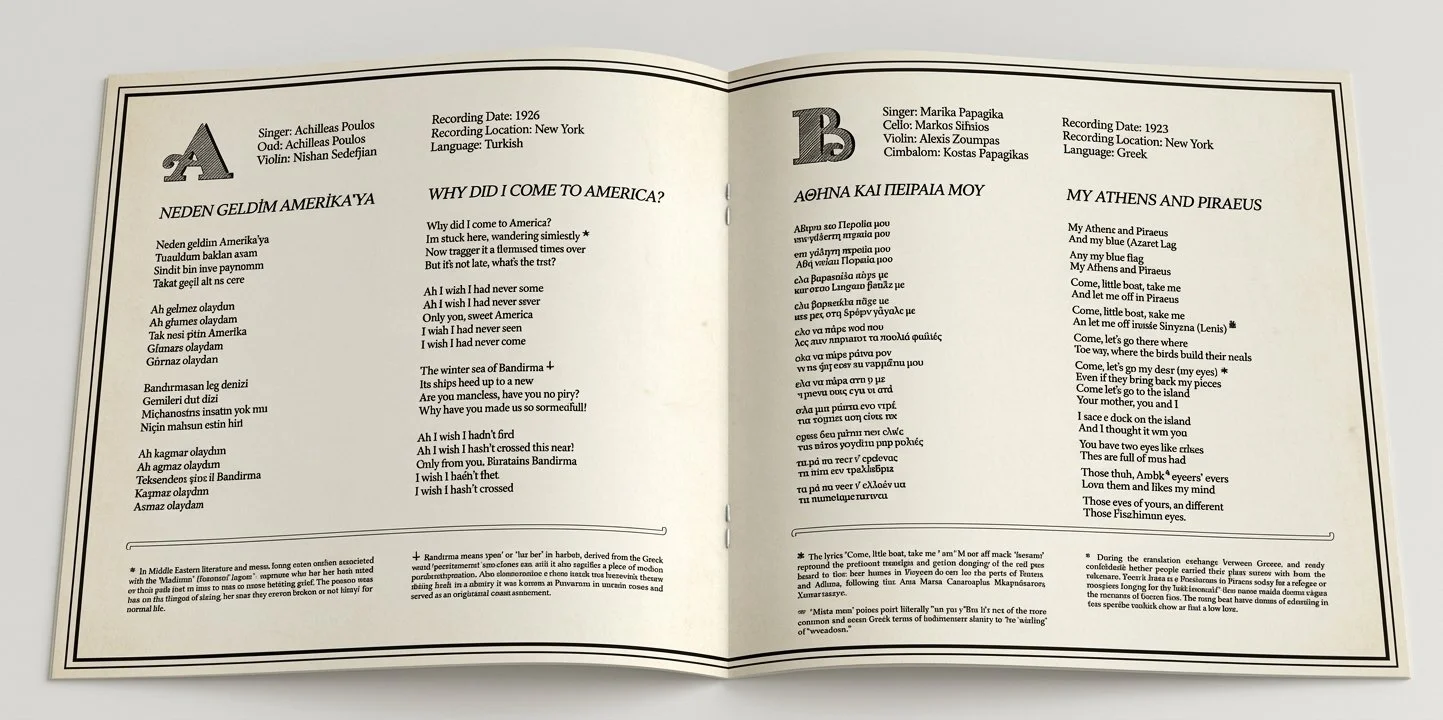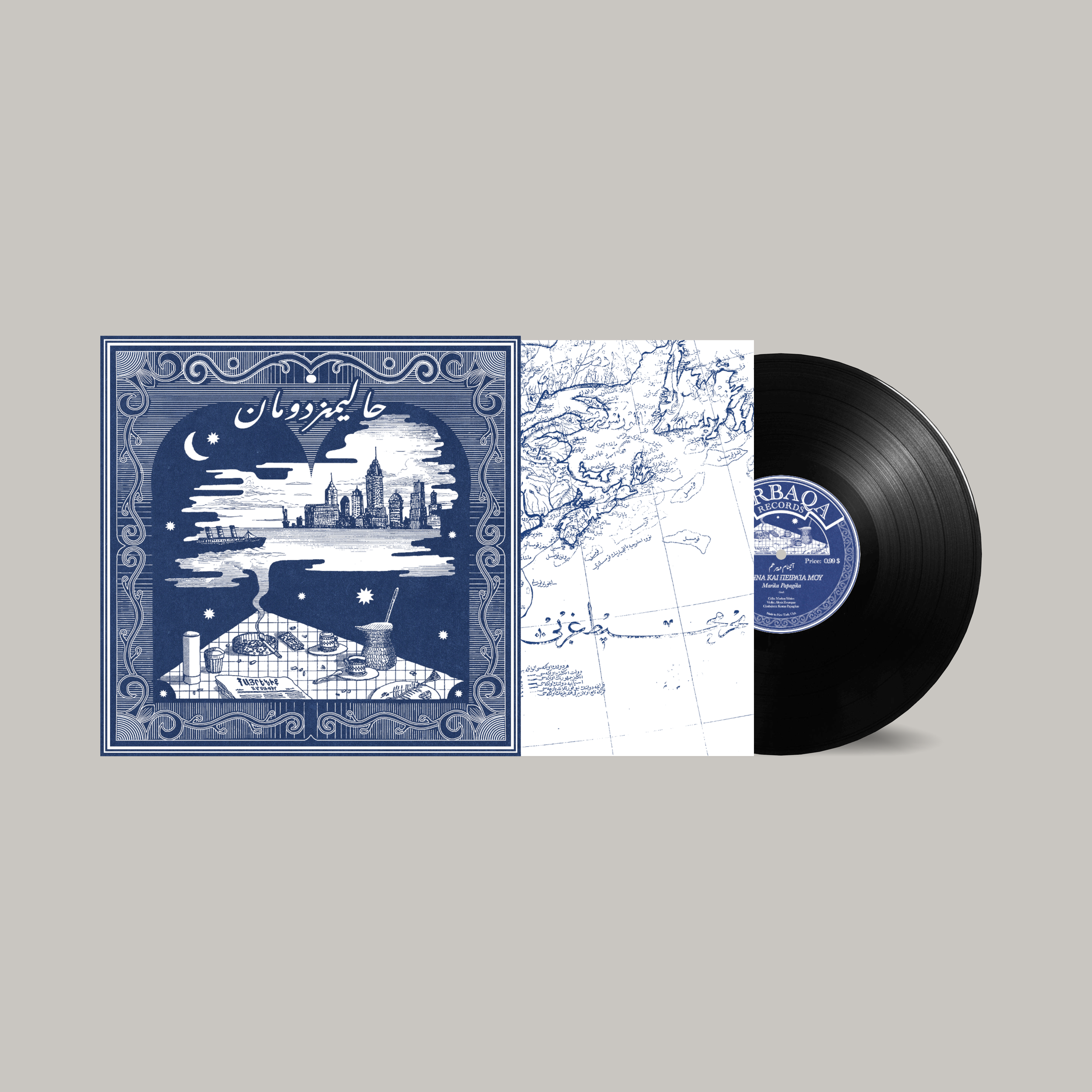
Larissa Araz’s artwork, Hâlimiz Duman, presents a vinyl record featuring two songs that were recorded in New York by Achilleas Poulos (from Bandırma) and Marika Papagika (from Kos). These tracks trace the musical life of Ottoman immigrant communities in New York City during the early twentieth century. These recordings emerged in the aftermath of war, genocide, and mass displacement from Anatolia and the broader Ottoman world.
In New York, Greek, Armenian, Assyrian, Sephardic, and Romaniote communities formed closely connected neighborhoods. Musicians moved between cafés, homes, and social gatherings, performing across linguistic, religious, and ethnic boundaries. Their music accompanied both celebration and mourning, serving as a shared emotional language in exile.
Many of these musicians led working-class lives, supporting themselves as peddlers, waiters, engravers, or shopkeepers. Their recordings circulated alongside imported discs from Constantinople, Smyrna, Athens, Sofia, and Cairo, which were avidly collected and preserved by immigrant families.
These vinyl records are not only documents of musical practice but also acts of cultural survival. They carried memory, nostalgia, and continuity across oceans at a moment when the world left behind had irrevocably collapsed.
As Larissa Araz researched this period, she sensed that her own world at home was collapsing once more; she did not yet realize that she, too, would soon become a migrant in New York.