All that we see or seem are ghosts within a dream
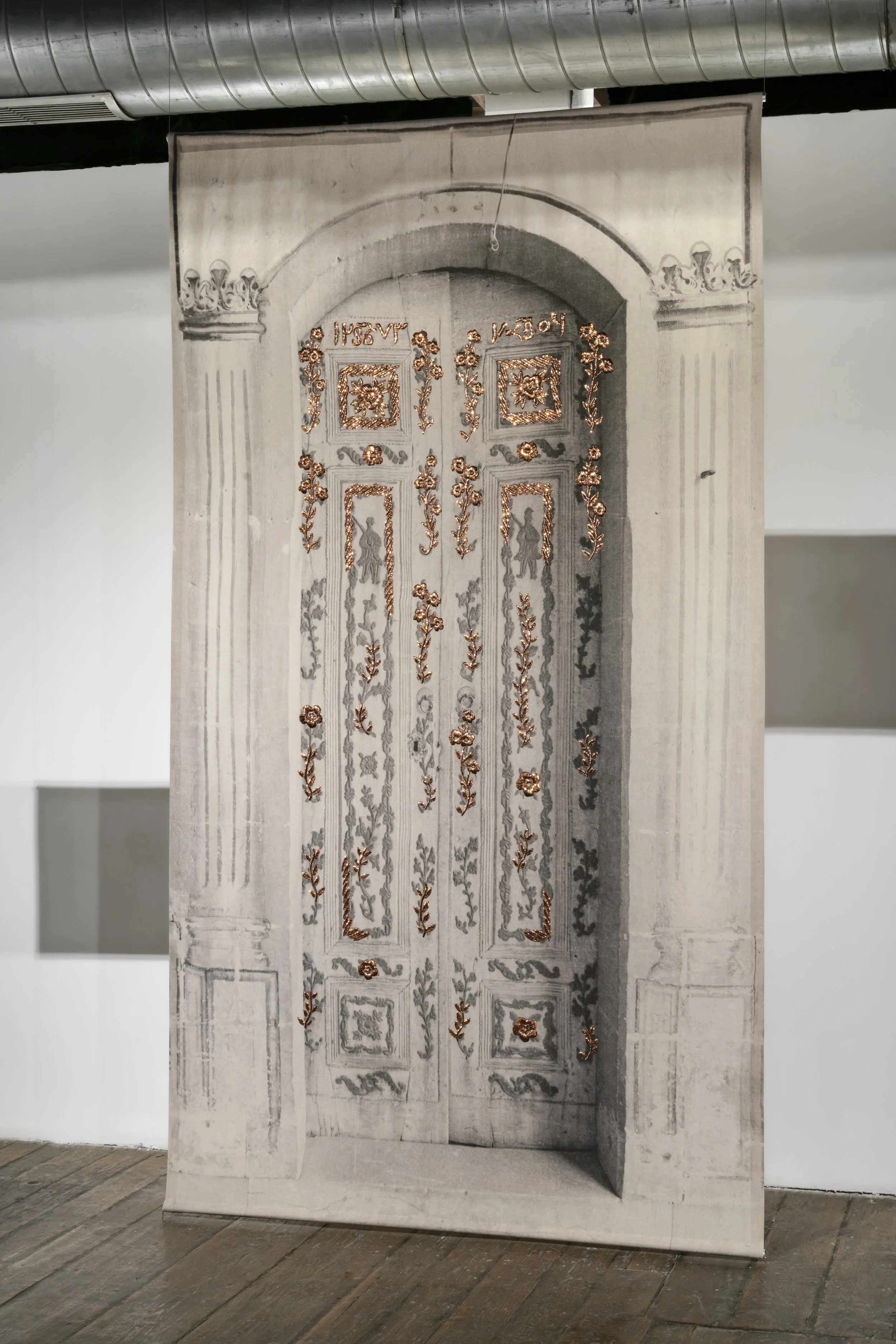
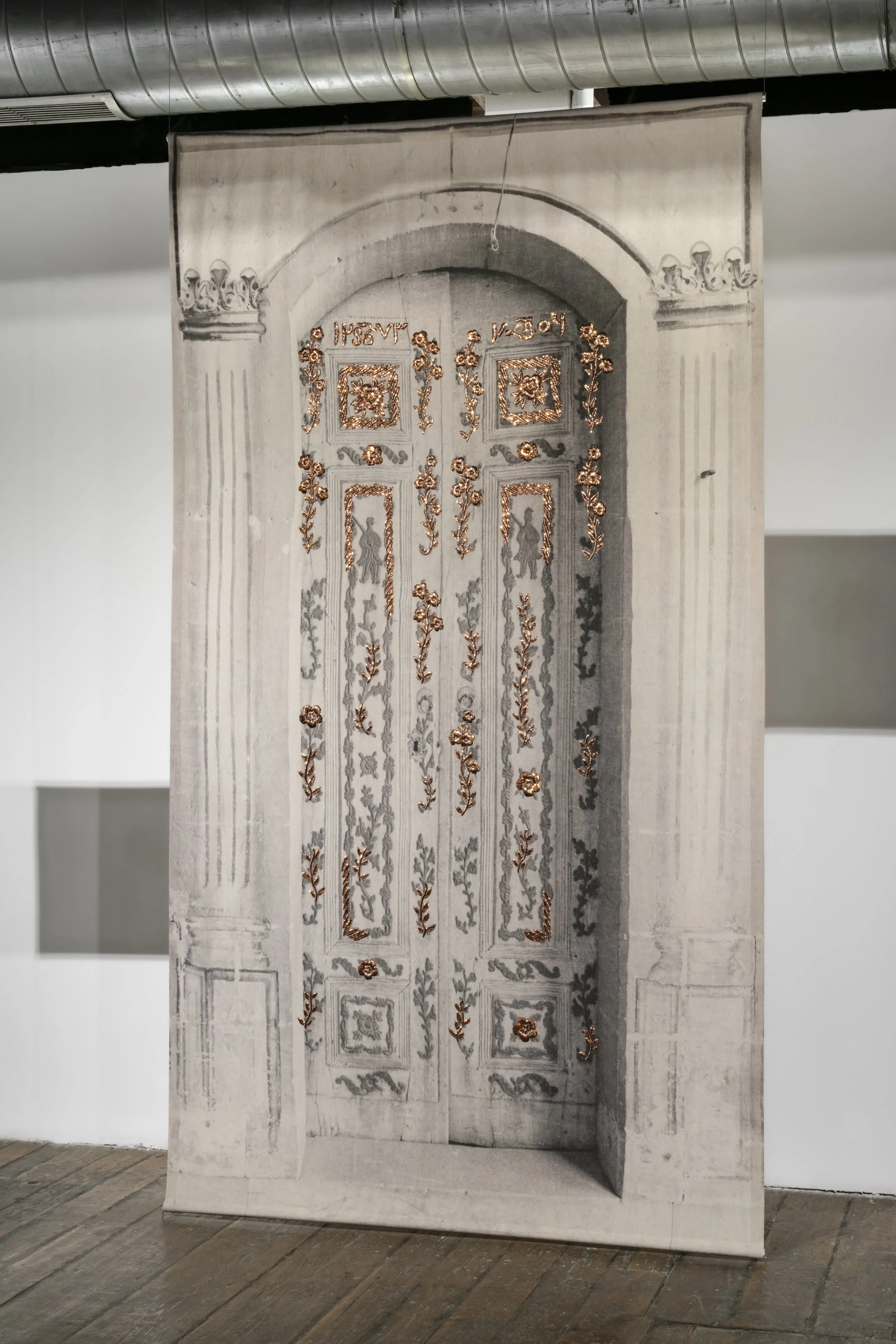
The photographic installation titled All that we see or seem are ghosts within a dream is created by embroidering Forget-me-not flowers onto a photograph printed on fabric, utilizing the traditional tel sarma (wire embroidery) technique. The structure in the photograph is the house of Nazar Nazaretyan (1815-1887), a prominent figure among the Armenians of Antep. Located in Antep’s old Armenian neighborhood known as Bey Mahallesi, the house operated as Papirüs Cafe until recently.
Nazar Agha Nazaretyan (often called “Kara Nazar”) was a master jeweler, a highly successful merchant, and served as the Honorary Consul to Iran. He was widely considered the wealthiest person in 19th-century Antep. The family was deported in 1915, and their massive wealth, factories, and properties like their mansion were confiscated and handed over to new elites who acquired their capital through state-sanctioned plunder. The Nazaretyan family essentially serves as the most fundamental and tangible example of the stolen capital that built modern Antep.
For centuries, coppersmithing and the copper trade have been the cornerstone of Antep's economy. The Forget-me-not flower, on the other hand, was selected as the official global symbol for the 100th-anniversary commemorations of the Armenian Genocide in 2015. The primary reason for choosing this flower is that its name directly evokes "remembrance," "memory," and "not forgetting the past" in many languages.
The artist was invited to an exhibition to be held in Antep in 2025 by one of the city’s local industrial conglomerates. When she expressed her desire to research this structure, she was brushed off by the organizers, and was later told that she could not conduct this research and that the subject would not interest anyone, leading her to withdraw from the exhibition. Drawing upon Ümit Kurt’s book The Armenians of Aintab: The Economics of Genocide in an Ottoman Province (Antep 1915: Soykırım ve Failler), which examines the local dynamics of the Armenian Genocide in Antep, property confiscations, and their underlying economic motivations, the artist quickly realized that the inviting institution was also one of the heirs to this stolen capital.
Ultimately, the artist never actually saw the door of the Nazaretyan house in person. However, she came across a 3D model shared publicly online by Azad Balabanian, who is also a diasporic Armenian from Antep. With Balabanian's permission, she applied the tel sarma embroidery onto the life-size photographs he provided.
The installation took shape in response to a question posed to the artist during a discussion with the organizers: “Is this really all you saw after looking so closely?” Drawing on this encounter, the artist makes visible the ghosts they live with through the Nazaretyan Mansion, a building left to decay.
Everything that has been forced into oblivion in these lands will continue to germinate, bloom, and be remembered again, like the seeds of resilient plants.